

What Makes a Graded Comic Worth the Premium?

We can all dream can’t we?
If you've ever browsed a comic marketplace and done a double-take at the price difference between two copies of the same issue — one raw, one sealed in a plastic slab — you've already asked the right question. Why does a graded comic cost so much more? And more importantly, is it actually worth it?
The honest answer is: sometimes yes, sometimes no. Here's how to tell the difference.
What Makes a Graded Comic Worth the Premium?
If you've ever browsed a comic marketplace and done a double-take at the price difference between two copies of the same issue, one raw and one sealed in a plastic slab, you've already asked the right question. Why does a graded comic cost so much more? And more importantly, is it actually worth it?
The honest answer is: sometimes yes, sometimes no. Here's how to tell the difference.
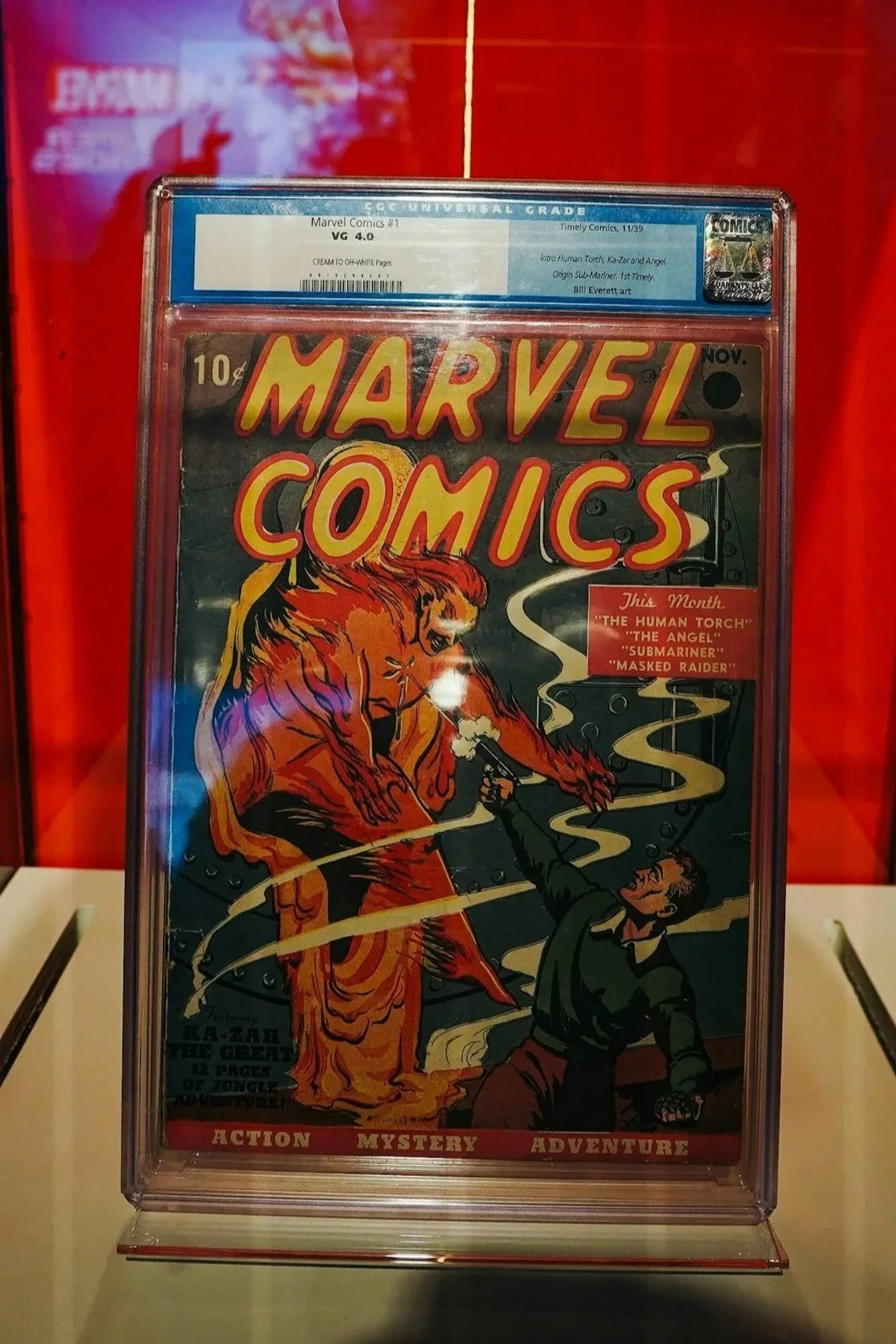
Marvel Comics 1 CGC 4.0
Not all slabs are created equal. This one earns it.
What Grading Actually Is
When collectors talk about graded comics, they're usually referring to books certified by CGC (Certified Guaranty Company), the dominant grading company in the hobby, or increasingly PSA, which recently expanded into comic grading. CBCS, which was long considered the main alternative to CGC, shut down in April 2026 after its parent company Beckett was acquired by Collectors Holdings, PSA's parent. The market has consolidated quickly: CGC and PSA are now the two names that matter for new submissions, though existing CBCS slabs remain fully documented and verifiable.
The process works like this: you submit a comic, a trained grader examines it for defects (spine stress, creases, staple condition, paper quality, tears, writing, and more), assigns it a numeric grade on a 0.5 to 10.0 scale, and seals it in a tamper-evident hard plastic case called a slab. The grade and key notes about the book are printed on the label inside.
That slab is a guarantee. It tells any buyer, anywhere in the world, exactly what condition that book was in at the time of grading, verified by a neutral third party rather than the seller.
The Three Things Grading Actually Protects
Condition verification. The comic market runs on trust, and trust is hard to establish between strangers. A seller's "Near Mint" and your Near Mint might be completely different things. A CGC 9.6 is a 9.6 whether you're buying from a shop in Vancouver or a dealer in Tokyo. Grading removes subjectivity from the equation.
Preservation. A properly stored slab protects the book from humidity, handling, and light degradation over time. For books you're holding long-term (especially high-value keys), this matters. A raw book in a bag and board is fine for most collections, but a slab is a sealed environment.
Market confidence. Graded books trade more freely and at more predictable prices because buyers know what they're getting. This liquidity is real value, especially if you ever plan to sell.
When Grading Makes Financial Sense
Grading isn't free. Submission fees, shipping, and wait times add up, so the math needs to work in your favour.
It makes sense for:
Significant key issues. First appearances of major characters, origin issues, landmark storylines. If the book has genuine market demand and the grade is strong, a slab amplifies that value considerably. A raw Amazing Spider-Man #300 in VF/NM condition and a CGC 9.8 of the same book aren't just slightly different in price. They can be worlds apart.
High grades on desirable issues. The premium for 9.6 and above is real and significant. A 9.4 and a 9.8 of the same key issue can have a price gap that makes grading the high-copy book a straightforward decision.
Newsstand editions and low-print variants. These already command premiums as raw copies. A slab that confirms authenticity and condition removes the main objection buyers have, and that objection costs you money at sale time.
When It Doesn't
Grading is not a value multiplier for every comic.
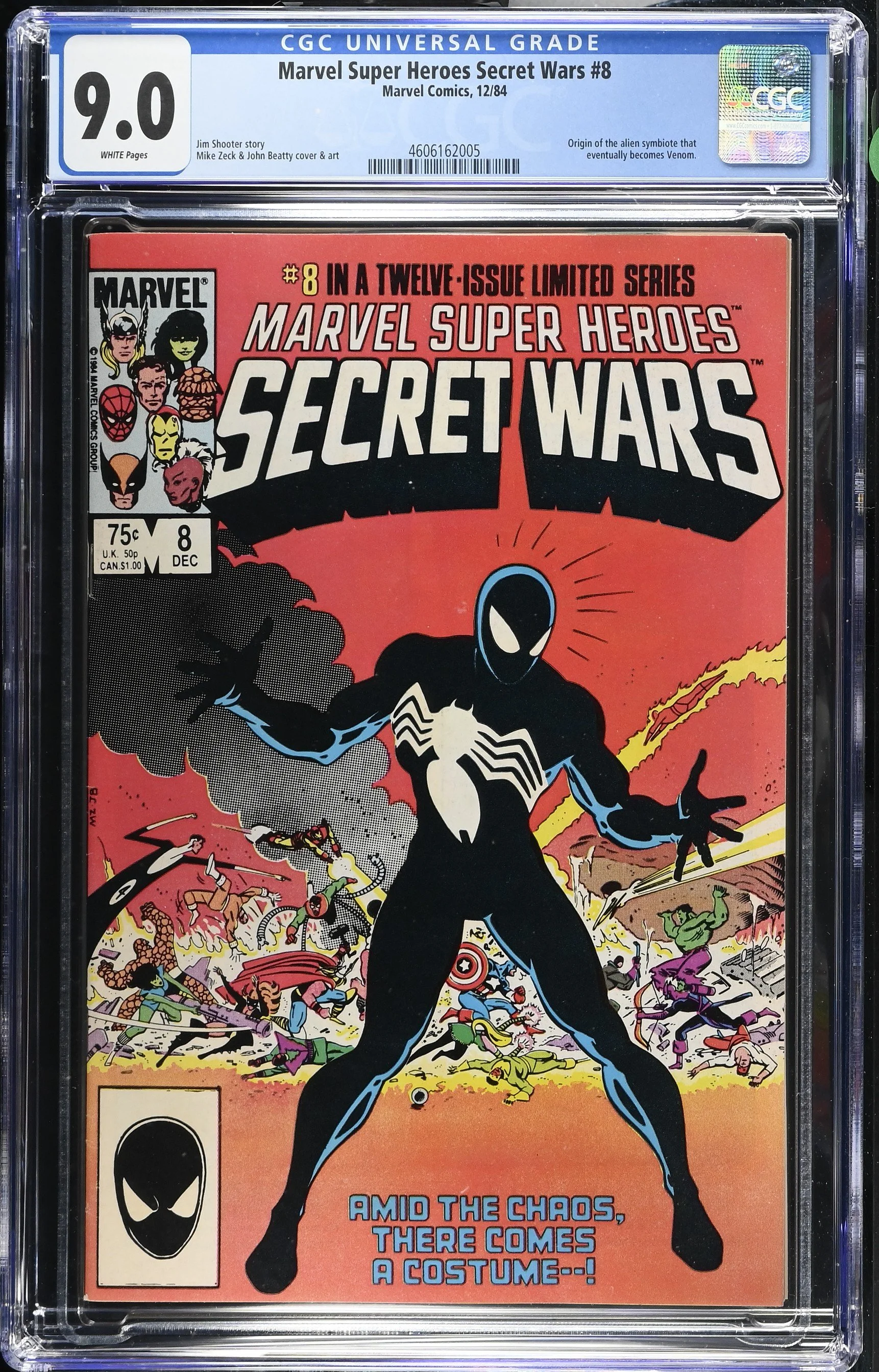
The comic that actually gave Spider-Man his black costume, the one that becomes Venom. Marvel Super Heroes Secret Wars #8 (December 1984) is written by Jim Shooter with cover and interior art by Mike Zeck and John Beatty, and this is the real origin of the alien symbiote costume, not a later cameo, not a reprint. This copy is CGC certified 9.0 with white pages, a clean, collector-grade way to own this key issue without stepping up to the far pricier 9.8 tier. CGC notes light spine stress lines on the cover, typical for a book of this age at this grade and no reflection on the slab or the assigned grade. Certification #4606162005, verifiable directly through CGC at cgccomics.com/certlookup/4606162005. If you've been hunting for the true starting point of Venom's entire lineage rather than a spin-off appearance, this is the book. Ships across Canada and the US, or grab it with local pickup here in Vancouver.
Low-grade slabs on common books rarely make sense. A CGC 4.0 of a widely available issue adds the cost of grading to a book that wasn't worth much raw. The slab doesn't create value. It just encases it.
Mid-grade copies of non-key issues. Unless the book has a specific reason collectors want it (creator significance, print run, variant story), a CGC 6.0 or 7.0 doesn't dramatically change the calculus versus a solid raw copy.
Books you want to read. This one's simple. Slabs aren't for reading. If the point is to enjoy the story, buy a quality raw copy and handle it carefully.
What to Look for When Buying Graded
Not all slabs are equal. A few things to check before you buy:
Label colour. CGC uses different label colours to indicate book status. Universal (blue) is the standard. Restored (purple) means the book has been professionally repaired, which significantly affects value, and some collectors avoid restored books entirely. Qualified (green) indicates a specific defect noted on the label.
Pressing notes. Some books are professionally pressed before grading to remove non-structural defects. This is legal and widely accepted, but it's worth knowing if the book was pressed before submission.
Case condition. Examine the slab itself. Cracks, yellowing, or a broken seal compromise the integrity of the enclosure. A damaged slab on an otherwise strong book is a negotiating point.
Browse Our Graded Inventory
Terminal City Collectibles carries a rotating selection of CGC graded books across genres and eras. Whether you're looking for a specific key or browsing for the right addition to your collection, we update stock regularly.
Browse graded comics at terminalcitycollectibles.com and if you're hunting something specific, reach out. We're happy to help you find it.